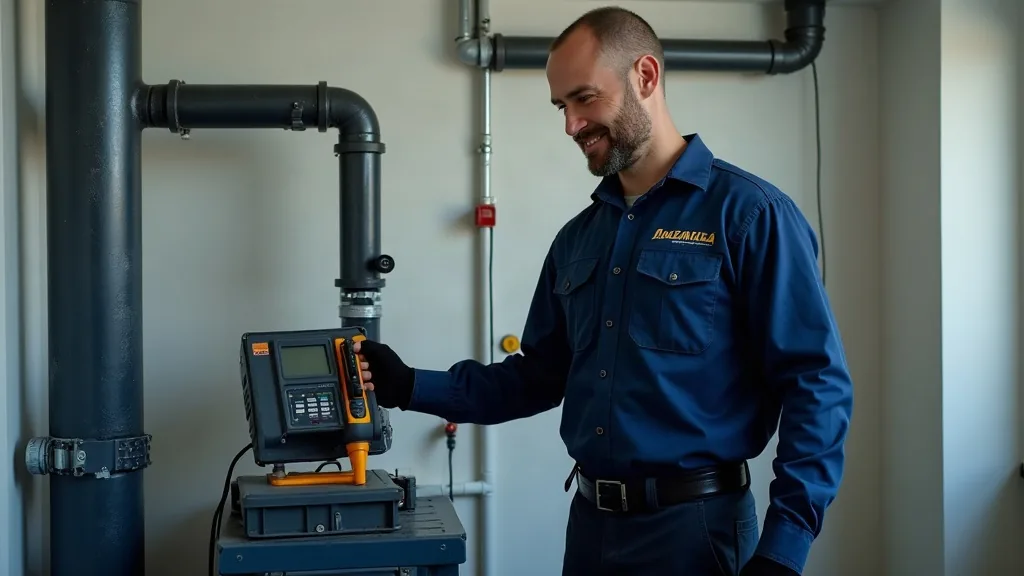
Garland's Blackland Prairie clay soils expand dramatically with rainfall and contract sharply during drought, exerting relentless lateral and vertical stress on the slab-embedded copper and cast-iron pipes running beneath thousands of mid-century homes across the city. When those soils shift, pipes shift with them — and the leaks that result are rarely visible until a water bill from Garland Water Utilities arrives with an unexplained spike, or a warm patch appears on a tile floor. Professional leak detection in Garland TX is not a precaution; for homes built between the 1950s and 1980s on this reactive soil, it is a statistical inevitability.
Our team serves Garland with electronic, acoustic, and thermal leak detection methods capable of pinpointing hidden failures beneath concrete slabs, inside cavity walls, and along buried service lines — without unnecessary excavation. Whether your trigger is an unusually high Garland Water Utilities bill, a post-freeze pressure drop, or a suspicious damp smell near a foundation wall, local pros locate the source accurately and walk you through every step, from detection through the City of Garland permit process to confirmed repair.
Garland Leak Detection: Slab Leaks in Black Clay Soil Homes
Garland's position on the Blackland Prairie means its residential soils are among the most reactive in the Dallas–Fort Worth region, and that reactivity directly determines how often slab leaks occur here. When drought conditions classified by the US Drought Monitor as D2 or higher set in — which happens periodically across the Dallas area — the clay beneath a slab can shrink unevenly, pulling away from foundation edges and creating differential movement that opens micro-cracks in pipes that may have passed a recent inspection without fault.
A significant share of Garland's housing stock was constructed between the 1950s and 1980s, when embedding copper pipe directly in concrete was standard practice. Those pipes are now 40 to 70 years past original construction — well within or beyond the statistical service life of that installation method. Homes from this era may also contain polybutylene pipe, which was widely used as a copper replacement through the late 1980s and is known to degrade from the inside out, making external visual inspection useless and acoustic or electronic detection essential.
- Blackland Prairie clay shrinks and swells with every rain-drought cycle, stressing pipe joints year-round.
- Most pre-1980 Garland homes have copper or polybutylene pipe embedded directly in the slab — materials now at or past statistical service life.
- Garland Water Utilities billing data frequently surfaces hidden leaks before any visible damage appears — a spike of more than 20% over a comparable billing period warrants a professional assessment.
- US Drought Monitor D2-or-higher conditions accelerate clay shrinkage and can generate new leaks even in recently inspected properties.
Our electronic leak detection process under a Garland slab follows a structured sequence. First, we isolate the supply line and use a digital pressure gauge to confirm and measure loss. We then introduce tracer gas — typically a hydrogen-nitrogen blend — into the pressurised pipe and deploy a surface-sensitive gas detector to map where the tracer escapes through the slab. Acoustic correlation equipment cross-references that signal by listening for the characteristic frequency signature of water escaping under pressure through concrete. Thermal imaging of the slab surface adds a third data layer, identifying temperature differentials caused by cooler escaping water. The intersection of all three data points gives us a precise location, limiting excavation to the smallest possible area.
Beyond slab leak detection, our work in Garland regularly includes drain cleaning for clogged lines stressed by root intrusion and soil movement, and sewer line repair for cast-iron drain stacks common in the city's older homes. Those services often surface during the same inspection that confirms a slab leak, so we coordinate them together where possible.
Detecting a Natural Gas Leak in a Garland Home
To detect a natural gas leak in a Garland home, the first step is understanding who operates the gas network: Atmos Energy distributes natural gas throughout Garland, while Garland Power & Light is the city's electric utility only and has no role in gas infrastructure. If you smell sulfur or rotten egg odour, leave the building immediately, avoid operating any switches, and call Atmos Energy's emergency line before calling any plumber — that sequence is non-negotiable for safety.
Once Atmos Energy has cleared the immediate emergency and isolated the meter, a local plumber can conduct a full gas leak repair assessment on the building-side piping — the lines from the meter to appliances — which falls outside the utility's responsibility. Local pros use combustible gas detectors calibrated to natural gas and propane concentrations, combined with pressure decay testing on the internal supply system, to locate the precise section of pipe that has failed.
Common causes of gas leaks in Garland's older homes
The same Blackland Prairie clay movement that stresses water supply lines also exerts force on gas service lines buried at shallow depth around Garland foundations. Black iron pipe and older corrugated stainless steel tubing connections are particularly vulnerable to joint stress caused by differential soil settlement. Post-freeze inspections are especially important: the National Weather Service records four to six hard freeze events per winter season in the Dallas–Garland area, and temperature drops into the low teens can cause pipe fittings to contract and open at threaded joints.
Gas leak repair process and what to expect
After confirming the leak location with instrumented detection, gas leak repair involves isolating and replacing the affected section under applicable code, then conducting a full pressure test of the repaired run before service is restored. We coordinate the reconnection inspection with Atmos Energy before any appliances are returned to service. Checking for gas leaks after any significant seismic-style ground movement — including the soil shifts Garland experiences during severe drought — is a sensible precaution even without an obvious odour.
Slab Leak Repair Permits Through the City of Garland
The City of Garland Development Services department requires a plumbing permit before any slab penetration or pipe replacement associated with a slab leak repair — this is enforced under the Texas Plumbing License Law and applies whether the repair involves rerouting supply lines above the slab or direct-access concrete cutting. The permit is pulled by the licensed plumbing contractor performing the repair, not the homeowner, and an inspection is required before the slab is closed.
This regulatory step adds a coordination layer that is not always required in unincorporated areas of Dallas County, so homeowners should factor it into their repair timeline. Local pros handle permit coordination with City of Garland Development Services on behalf of clients as a standard part of every confirmed slab leak repair engagement — detection findings are documented in a format that supports the permit application directly.
Cast iron pipe and slab leaks repair in older Garland homes
Many pre-1980 Garland homes have cast iron pipe for drain lines running beneath the slab, alongside the copper supply lines. Cast iron corrodes from the inside over decades, and the same soil movement that cracks supply lines can fracture drain-side cast iron at coupling joints. A slab leaks repair project in a 1960s or 1970s Garland ranch home often involves both water supply and drain-side work, requiring separate permit line items for each scope of repair — something our team flags at the detection stage so there are no surprises at the Development Services counter.
For a 1960s–1980s Garland home with polybutylene pipe or cast iron pipe beneath the slab, professional electronic leak detection typically runs between depending on slab size, number of lines to be tested, and whether tracer gas deployment is required alongside acoustic and thermal methods. That figure covers detection and location only; repair costs are quoted separately after the permit scope is defined with City of Garland Development Services.
Leak Detection for Pools in Garland Backyards
Leak detection for pools presents a distinct challenge in Garland because the same expansive clay soils that stress slab-embedded plumbing also move beneath pool shells and their return and supply plumbing. A pool losing more than a quarter-inch of water per day beyond normal evaporation — common in Garland's 100°F-plus summers — warrants a structured leak test rather than a simple top-up.
Our pool leak detection process begins with a bucket evaporation test to establish a baseline, followed by pressure testing of each return line, skimmer, and main drain fitting individually. Where pressure decay confirms a line failure, acoustic listening equipment isolates the underground section at fault without requiring full excavation of the pool surround. Garland's drought-driven soil shrinkage can open hairline cracks in gunite shells and pull fittings away from the shell wall, so structural checks run in parallel with pipe-side pressure tests on every pool inspection we conduct here.
If a pool leak investigation reveals issues with the connected irrigation system — common in Garland properties where pool return and irrigation lines share a manifold — a local plumber can extend the pressure test sequence to cover irrigation system leak detection as part of the same visit, keeping excavation and landscaping disruption to a minimum.
Water Leak Repair Near Me: Cost for Older Garland Homes
When Garland homeowners search for water leak repair near me, the cost question is usually the first one, and in this city the answer depends heavily on the age and pipe material of the home. A property built in the 1960s with original copper supply lines embedded in concrete and cast iron drain lines beneath the slab is a fundamentally different job from a 1990s home with PVC supply and ABS drain — the older configuration requires more detection time, a higher probability of multi-point failure, and a mandatory permit through City of Garland Development Services before any slab penetration begins.
Homes from the late 1970s and 1980s that used polybutylene pipe as a then-modern alternative to copper face a particular challenge: polybutylene degrades from internal oxidation, so a water sensing scan of the slab surface may show no thermal anomaly even when the pipe is actively failing. Full acoustic correlation and pressure decay testing are required to locate polybutylene failures with confidence, which affects both detection time and cost.
Booking timing and seasonal demand
Demand for water leak repair in Garland peaks sharply in February and March following hard freeze events, and again in May and June as drought-season soil shrinkage accelerates. If your home has not had a slab inspection and you are planning one before summer, booking in April — before the drought-season rush — typically means shorter lead times and more scheduling flexibility.
Water leak repair scope beyond the slab
Water leak repair in Garland properties frequently extends beyond the slab itself. Shower leak investigations, water heater supply line failures, and outdoor hose bib cracks from freeze events are all routine follow-on repairs after a primary slab leak is confirmed. A smart water leak detector installed on the main supply line after repair gives ongoing water sensing capability and can alert homeowners to pressure drops before the next billing cycle with Garland Water Utilities surfaces the problem.
Serving Garland and Nearby Richardson, Plano, and Dallas for Leak Detection Calls
Who does leak detection in Garland Texas, and do they also cover nearby cities? Our team covers Garland as a primary service area and extends the same electronic and acoustic detection capabilities to Richardson, Plano, Dallas, and Rockwall. Find a slab leak detector near me in Garland: calling +1 877 682 0374 connects you directly with our scheduling team, available any time.
Garland's soil conditions are genuinely more demanding than those in parts of Richardson or Plano where sandier transitional soils reduce the shrink-swell amplitude. That difference in soil reactivity means detection work in Garland more often requires the full three-method protocol — tracer gas, acoustic correlation, and thermal imaging — while some jobs in adjacent communities can be resolved with acoustic and pressure testing alone. We apply the method set that the soil and pipe type require, not a fixed package, so detection scope and cost reflect the actual conditions of each property.
For detailed information about how we approach leak detection in those surrounding communities, visit our dedicated pages: Leak Detection in Richardson, Leak Detection in Plano, Leak Detection in Dallas, and Leak Detection in Rockwall. Our coverage across Texas also includes Leak Detection in San Antonio.
A water leak detector deployed on a Garland home's main line provides real-time water sensing that can bridge the gap between annual inspections — particularly useful during the freeze season when the National Weather Service records temperatures in the low teens and hidden pipe bursts may not reveal themselves until the thaw. Gas leak repair calls from Garland are routed with the same priority as water leak calls, given that Atmos Energy's service line responsibility ends at the meter and building-side gas systems in older Garland homes carry the same age-related risk profile as their water supply counterparts.
Ready to Locate Your Leak? Call TrueLeak Pros for Garland Leak Detection
Garland's reactive clay soils and aging mid-century pipe systems make professional leak detection a practical necessity, not an optional service. Whether you're dealing with a slab leak under a 1970s ranch home, a post-freeze hidden burst, a pool losing water daily, or an unexplained spike on your Garland Water Utilities bill, our team has the equipment and local knowledge to find it accurately.
Call us any time: +1 877 682 0374
Upfront pricing. No unnecessary excavation. Full permit coordination with City of Garland Development Services included on every slab leak repair engagement.
Merrick Brian Garland (born November 13, 1952) is an American lawyer and jurist who served as the 86th United States attorney general from 2021 to 2025. He previously served as a circuit judge of the United States Court …
Firewheel Town Center is a 998,347-square-foot (92,749.5 m2) open-air regional shopping mall in Garland, Texas. The mall is located on the northeast corner of President George Bush Turnpike and State Highway 78.…
Our Services in Garland
Comprehensive leak detection solutions for Garland homes and businesses
drain cleaning
Professional drain cleaning available throughout Garland and surrounding areas.
Get a Quotesewer line repair
Professional sewer line repair available throughout Garland and surrounding areas.
Get a Quoteslab leak repair
Professional slab leak repair available throughout Garland and surrounding areas.
Get a QuoteService Coverage: Garland
Providing leak detection throughout Garland
Service Areas
Landmarks Near Us
leak detection in Garland — Common Questions Answered
Everything you need to know before hiring a professional in Garland
Why Garland Homeowners Trust Us
The difference that makes our leak detection stand out in Garland
Identify hidden leaks before they cause damage.
One number for every address in Garland.
Save on water bills with efficient leak solutions.
You hear the price for the job before any work starts.
Minimize disruption with advanced detection technology.
Help for homes and businesses across Garland.
Enhance your home's safety and comfort.
Call any time and say how urgent it is.
More Garland Services
Explore related pages
Leak Detection in Richardson
Leak Detection in Richardson — more from our Garland coverage.
Leak Detection in Plano
Leak Detection in Plano — more from our Garland coverage.
Leak Detection in Dallas
Leak Detection in Dallas — more from our Garland coverage.
Leak Detection in Rockwall
Leak Detection in Rockwall — more from our Garland coverage.
Leak Detection in San Antonio
Leak Detection in San Antonio — more from our Garland coverage.
How leak detection Works in Garland
4 steps from first call to finished job
Call
Tell us what is wrong at your Garland property and when suits you.
Call Now
You hear the price for the job before any work starts.
The Work Is Done
The work is carried out at your Garland property at the time agreed.
Aftercare
Something not right afterwards? Call the same number.