Hidden leaks in Frisco homes rarely announce themselves. More often, the first sign is a water bill that has quietly climbed, a warm patch under tile, or a faint sulphur smell near a gas fitting — by which point water or gas has already been escaping for days or weeks. Because Frisco sits on expansive Blackland Prairie clay soils that swell after spring rains and shrink sharply during the long summer dry spells, the ground beneath a concrete slab is never truly still. That constant movement puts cyclical stress on every copper or PEX pipe embedded inside the foundation, making Frisco one of the more demanding environments for leak detection anywhere in North Texas.
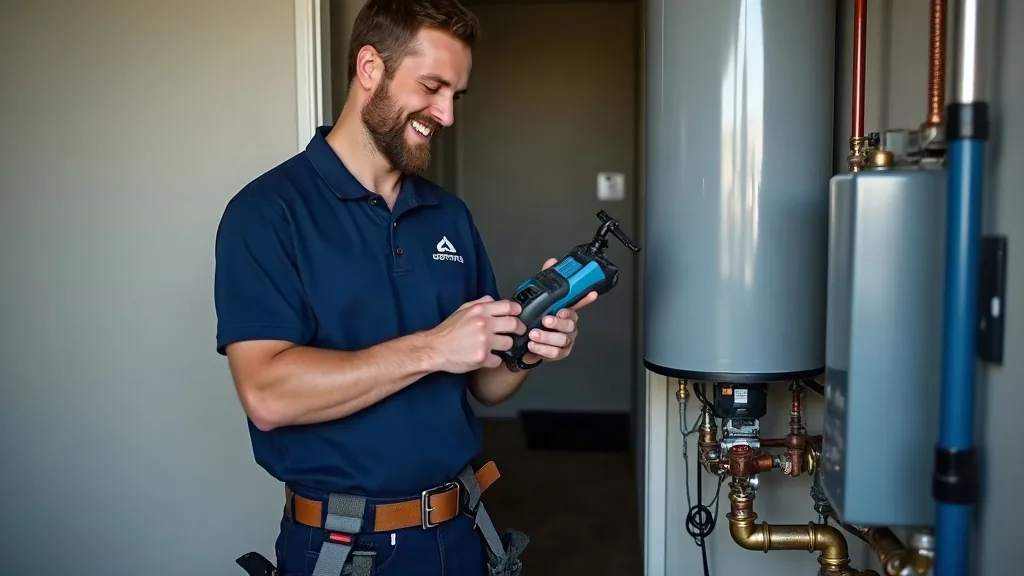
Our team serves Frisco and the surrounding Collin County corridor with specialist leak detection equipment — acoustic listening devices, infrared thermal imaging cameras, moisture meters and digital pressure testing rigs — so that we can find the exact failure point before a single tile is lifted or a wall is opened. Whether the problem is a slab-embedded supply line, a gas fitting, an outdoor irrigation run, or a pool shell, our local experts carry the tools to isolate it non-invasively and give you a clear repair plan with upfront pricing before any work begins. Call us any time at +1 877 682 0374.
Slab Leak Repair Costs in Frisco's Newer Homes
Slab leak repair in Frisco typically runs between for the detection and pipe repair itself, but total project costs in the city's newer, larger-footprint homes can reach once flooring restoration is included. Frisco's master-planned subdivisions frequently feature large-format porcelain tile, engineered hardwood and thick concrete overlays — materials that cost considerably more to remove, replace and refinish than the flooring found in older Texas builds.
Before any slab is opened, our network of licensed pros run a pressure test on the supply system to confirm that an active leak is present and to bracket the section of pipe under stress. That step alone saves homeowners from unnecessary excavation. Post-tension slab construction is common throughout Frisco's newer subdivisions, and cutting into one of those slabs without first pinpointing the fracture to within a few inches risks severing a tensioning tendon — a structural consequence that turns a plumbing repair into a foundation repair. Precise leak location is not optional here; it is what makes the rest of the project safe.
Once the leak is confirmed and located, the most common repair routes are direct-access tunnelling under the slab, pipe rerouting through walls or the attic, or full repipe of the affected zone in PEX pipe when multiple pinhole failures suggest systemic corrosion. The right choice depends on how many failure points the pressure test and acoustic sweep reveal, the age and material of the existing lines, and the cost of restoring the finished floor above. We walk through every option with upfront pricing so there are no surprises on the invoice.
Beyond slab work, our team also handles sewer line repair and drain cleaning — services that often come up in the same diagnostic visit when slow drains or sewage odours accompany a suspected foundation leak.
Leak Detection Service Across Frisco, Plano, McKinney and Carrollton
Our leak detection service covers Frisco and extends to Plano, McKinney, Carrollton and RichardsonWe also serve customers further south through our Leak Detection in San Antonio operations, so the same diagnostic standards and equipment apply regardless of which part of Texas you are in.
Within Frisco specifically, we respond to calls across every residential area — from the established neighbourhoods near Stonebriar Centre to the newer developments along the Warren Parkway Corridor and Legacy Drive. Whether the job involves a water leak detector trace on an irrigation supply line, a gas leak check near a meter set, or a pool leak investigation in a backyard that has seen its water level drop unexpectedly, our team brings the same non-invasive process to every address.
If you are asking who does leak detection in Frisco Texas or searching for a slab leak specialist near me in Frisco, the answer is straightforward: call +1 877 682 0374
Reading your Frisco water bill as a first diagnostic step
Frisco water is supplied by the North Texas Municipal Water District. If your statement shows a usage spike of more than 20–30 percent over the same billing period in a prior year — and nothing obvious like a new irrigation zone explains it — go to your water meter at the street and watch the low-flow indicator dial with every fixture in the house shut off. Any movement confirms water is escaping somewhere in your system before it reaches a tap.
Irrigation and outdoor supply line leaks
Frisco's large irrigated residential lots are a significant source of undetected outdoor supply line leaks. Because the ground surface above a pressurised irrigation line may show no pooling — particularly during the summer months when surface evaporation is rapid — a slow underground leak can run for a full billing cycle without any visible clue. An underground water leak detector or electronic leak detector trace along the irrigation supply is the fastest way to isolate the fault without trenching the lawn.
Why Even New Construction in Frisco Gets Slab Leaks
A newly poured slab does not mean stable ground beneath it. Frisco's Blackland Prairie clay soils — documented extensively by the USDA Web Soil Survey for Collin County — undergo significant volume changes with every wet and dry cycle. A slab poured during a wet spring sits on swollen clay; by mid-summer, as Frisco averages over 230 days of sunshine per year and extended dry periods follow the spring thunderstorm season, the same clay contracts and the slab loses uniform support. Copper or PEX pipe embedded in the foundation flexes with each seasonal cycle, and micro-fractures can open within the first three to five years of construction.
Hard water from the North Texas Municipal Water District supply compounds the problem. NTMWD delivers water with moderate-to-high mineral hardness typical of North Texas surface sources, and those minerals accelerate internal corrosion inside copper pipe fittings and slab-embedded joints. The result is pinhole leaks — losses too small to hear without acoustic leak detection equipment but large enough to saturate the sand bed beneath the slab over weeks. Infrared thermal imaging is particularly effective here: a wet sand bed holds temperature differently from a dry one, and that contrast appears clearly on a thermal camera before any moisture reaches the surface.
Post-freeze conditions add a third failure mechanism. February 2021's Winter Storm Uri, documented in National Weather Service Fort Worth after-action reports, demonstrated that newer Frisco construction with PEX or copper supply lines routed through uninsulated exterior walls or slab penetrations is vulnerable to burst damage. Post-freeze slab penetrations and exterior-wall runs are the first sections our network of licensed pros inspect whenever a call comes in after a hard freeze event.
The acoustic and thermal detection process, step by step
Our standard detection sequence begins with a pressure test: we isolate the supply system and charge it to operating pressure, then monitor for a pressure drop over a timed interval. A confirmed drop tells us a leak is present and gives us a rough sense of its volume rate. We then walk the slab with acoustic leak detection equipment — ground microphones and electronic amplifiers that filter out ambient noise and lock onto the distinctive frequency signature of water escaping a pressurised pipe through a fracture in concrete.
Infrared thermal imaging follows as a secondary confirmation. Where acoustic signals suggest a failure zone, the thermal camera shows the temperature differential caused by moisture migration through the sand bed or concrete, narrowing the target area to within inches. Only after both methods agree on a location do we mark the slab for cutting — ensuring that the smallest possible area is disturbed, and that post-tension tendons are avoided entirely.
Atmos Energy Gas Leak Checks for Frisco Homeowners
If you suspect a gas leak in your Frisco home, the first call is to Atmos Energy, which supplies natural gas throughout the city and is responsible for securing the meter and the service line up to the point where it enters your property. Atmos Energy will shut off supply and clear the immediate hazard — but finding and repairing the leak inside your home's internal piping is the work of a licensed plumber, not the utility.
Our team carries calibrated gas leak detection equipment that performs a pressure test on the interior gas system and traces any pressure loss to its source — whether that is a corroded fitting at a water heater connection, a joint behind a cooktop, or a supply line running beneath a slab. We work from the meter inward, isolating each zone of the system until the fault is located, then perform the repair and retest to confirm zero pressure loss before gas is restored.
When to call for gas leak detection versus standard leak detection
Any smell of rotten egg or sulphur near a gas appliance, hissing near a gas line, or a dead vegetation patch over an underground gas run warrants an immediate call — do not attempt to find the leak yourself with an open flame. For less urgent scenarios, such as a water heater connection that failed a routine pressure test during a home inspection, our gas leak detection service can be scheduled alongside a standard plumbing leak detection visit to consolidate the diagnostic work.
Finding Hidden Leaks in a Frisco Backyard Pool
Pool leaks in Frisco fall into two distinct categories — shell leaks and equipment pad leaks — and the detection method differs meaningfully between them. A shell leak originates at a crack or failed fitting in the pool structure itself; an equipment pad leak originates at a pump seal, valve, filter housing or return line fitting in the mechanical bay. Because equipment pad leaks are far more common and far easier to access, our network of licensed pros always inspect the equipment pad with a moisture meter and visual check before concluding the shell is at fault.
For shell leaks, the process begins with a pressure test on the return and suction plumbing runs to rule out underground pipe failure between the shell and the equipment pad. If the pressure holds, we move to a dye test at suspected fittings, skimmers and light niches to identify where water is escaping through the shell. Frisco's large irrigated lots mean that a slow shell leak can go unnoticed for weeks because the lawn is already wet and the pool auto-fill valve compensates for the loss — the pool level stays constant while water escapes continuously.
A quick check before calling us
Place a bucket of pool water on a step inside the pool, mark both the bucket water level and the pool water level with tape, and leave both undisturbed for 24 hours with the pump off. If the pool level drops significantly more than the bucket — which loses water only to evaporation — a leak is almost certainly present and a pressure test on the plumbing runs is the right next step.
Water Leak Repair Costs and Timelines in Frisco
Water leak repair costs in Frisco range from around for an accessible copper pipe joint or PEX pipe connector repair, up to the slab-level figures described earlier for foundation-embedded failures. A water heater connection repair typically falls in the range depending on whether the fitting is at the inlet, outlet or the pressure relief line. Sewer line repair is priced separately after a camera inspection confirms the fault location and extent — partial liner repairs are considerably less disruptive and less expensive than full section replacement.
Timelines depend on access. A slab-access repair in a post-tension foundation typically requires one to two days for the concrete work alone, with flooring restoration scheduled separately. Drain cleaning is frequently the fastest service on our menu — a standard hydro-jet clean of a blocked line can be completed in a single visit.
Prevention tips for newer Frisco construction
Monitor your water meter reading monthly and compare it against your NTMWD bill — unexplained gaps between the two indicate a loss somewhere in your system. Inspect pool equipment pad seals at the start of each season before the summer run-up begins; small weeps at pump unions harden and crack as the Texas heat cycles them repeatedly. For slab homes, a pressure test every few years — particularly following a severe drought cycle or a hard freeze event — catches micro-fractures before they become active leaks that saturate the foundation sand bed.
Our guarantee
Every detection visit is backed by a written report confirming the method used, the equipment readings recorded and the location marked.
Get Fast Leak Detection in Frisco, TX Today
Whether you have a rising water bill, a warm patch in your floor, a gas smell near an appliance, or a pool losing water overnight, a local plumber is ready to find the source accurately and give you upfront repair options — no guesswork, no unnecessary demolition.
TrueLeak Pros — serving Frisco and the wider Collin County area.
Call us any time: +1 877 682 0374
We also cover Plano, McKinney, Carrollton and Richardson — same team, same standards, same upfront pricing.
Frisco is a city in Collin and Denton counties in the U.S. state of Texas. It is part of the Dallas–Fort Worth metroplex (DFW) and about 25 miles (40 km) from both Dallas Love Field and Dallas/Fort Worth International Ai…
Toyota Stadium is a sports venue located in Frisco, Texas, a suburb of Dallas. Built and owned by the city of Frisco, its primary tenant is Major League Soccer club FC Dallas.…
Our Services in Frisco
Comprehensive leak detection solutions for Frisco homes and businesses
drain cleaning
Professional drain cleaning available throughout Frisco and surrounding areas.
Get a Quotesewer line repair
Professional sewer line repair available throughout Frisco and surrounding areas.
Get a Quoteslab leak repair
Professional slab leak repair available throughout Frisco and surrounding areas.
Get a QuoteWhy Frisco Homeowners Trust Us
The difference that makes our leak detection stand out in Frisco
Identify hidden leaks before they cause damage.
One number for every address in Frisco.
Advanced technology for accurate leak detection.
You hear the price for the job before any work starts.
Expert technicians with extensive knowledge.
Help for homes and businesses across Frisco.
Prompt service to minimize disruption.
Call any time and say how urgent it is.
How leak detection Works in Frisco
4 steps from first call to finished job
Call
Tell us what is wrong at your Frisco property and when suits you.
Call Now
You hear the price for the job before any work starts.
The Work Is Done
The work is carried out at your Frisco property at the time agreed.
Aftercare
Something not right afterwards? Call the same number.
leak detection in Frisco — Common Questions Answered
Everything you need to know before hiring a professional in Frisco
Service Coverage: Frisco
Providing leak detection throughout Frisco
Service Areas
Landmarks Near Us
More Frisco Services
Explore related pages
Leak Detection in Plano
Leak Detection in Plano — more from our Frisco coverage.
Leak Detection in McKinney
Leak Detection in McKinney — more from our Frisco coverage.
Leak Detection in Carrollton
Leak Detection in Carrollton — more from our Frisco coverage.
Leak Detection in Richardson
Leak Detection in Richardson — more from our Frisco coverage.
Leak Detection in San Antonio
Leak Detection in San Antonio — more from our Frisco coverage.