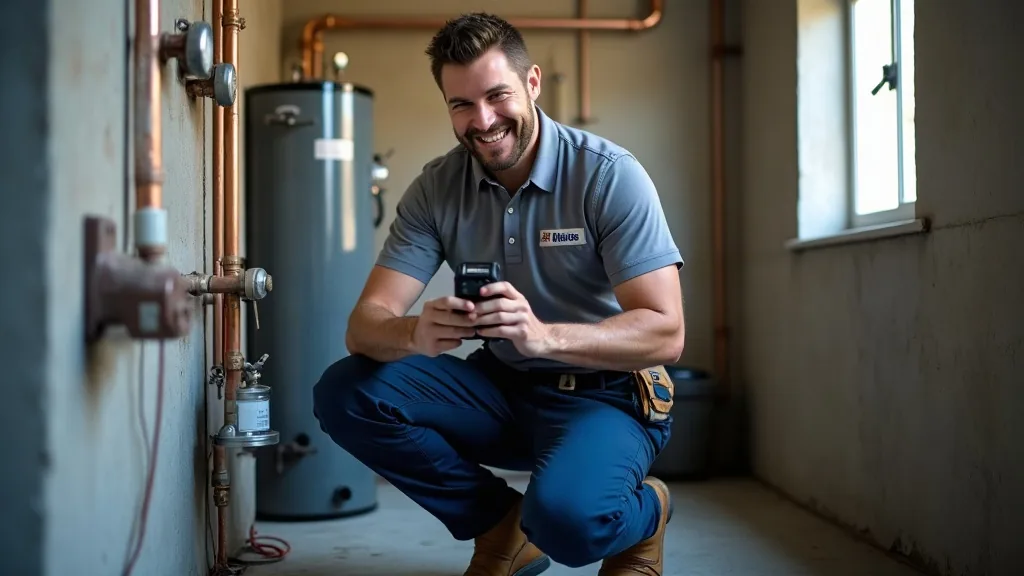
Expansive Blackland Prairie clay soils in Tarrant County shift dramatically with wet and dry cycles, stressing slab foundations and the copper or PVC pipes embedded within them. Fort Worth's periodic hard freezes — sometimes with little warning — regularly burst supply lines in attics, exterior walls and under slabs in homes that lack adequate insulation. When you add the mineral-heavy water supplied through the Fort Worth Water Department's reservoir system, which accelerates corrosion inside copper and galvanised pipes, it becomes clear that this city places extraordinary year-round stress on residential plumbing.
Our team serves Fort Worth and the broader Tarrant County area with non-invasive leak detection technology designed specifically for the conditions here: shifting clay, ageing mid-century copper systems and the frost-burst aftermath of storms like February 2021's Winter Storm Uri. Whether you have a slab leak forming quietly beneath your foundation or a supply line that failed overnight, local pros locate it precisely before a single inch of concrete is cut.
Slab Leak Repair Costs and Permits in Fort Worth
Slab leak detection in Fort Worth typically runs between depending on foundation size, accessibility and the complexity of the pipe layout beneath the slab. Repair costs vary more widely — a targeted spot repair on an isolated copper pipe section generally falls in the , while rerouting a pressurised supply line above the slab using PEX pipe can reach , and a full repipe of the under-slab system in a larger mid-century home may exceed . The Blackland Prairie clay soils beneath Tarrant County slabs exert ongoing lateral and vertical stress on embedded pipes, so the age and condition of the foundation itself affects both the detection difficulty and the safest repair method.
Before any slab penetration work begins, a plumbing permit must be issued through the City of Fort Worth Development Services Department. Slab-opening repairs also require an inspection. This is not a formality — it is a legal requirement that protects both the homeowner and the property's resale value. Precise pre-repair leak location is therefore essential: every unnecessary core drill adds time, cost and inspection complexity. Our team locates the leak to within inches before recommending any concrete work, so the permit covers only what actually needs opening.
Switching from corroded copper to PEX pipe — either as a spot reroute or as part of a broader repipe — is the most common long-term fix for Fort Worth homes whose ageing systems are entering their highest-risk corrosion window. PEX is flexible enough to accommodate minor soil movement, which matters in a city where the ground beneath a slab rarely stays completely still.
Leak Detection Coverage in Fort Worth, Arlington, Keller and Irving
We serve Fort Worth and extend our leak detection coverage across the surrounding Tarrant County communities, including Leak Detection in Arlington, Leak Detection in Keller and Leak Detection in Irving. Each of these areas shares the same Blackland Prairie soil conditions and much of the same mid-century housing stock, so the detection methods local pros use in Fort Worth apply directly across the region.
When you notice an unexplained spike on your water meter reading, that is often the first measurable sign of a hidden leak. Our water leak detector equipment — including acoustic listening devices and correlating sensors — can confirm whether the loss is occurring on the pressurised supply side, in the drain system or at an irrigation connection, without digging exploratory trenches. For customers in Fort Worth's older neighbourhoods such as Fairmount or Mistletoe Heights, where the housing stock and soil conditions are particularly demanding, we treat every call as a precision job rather than a process-of-elimination exercise.
If you are searching for emergency leak detection in Fort Worth or asking "is there a leak detection company near me in Fort Worth Texas?" — the answer is yes. We cover the full city and respond to calls across the Tarrant County service area. Haltom City, North Richland Hills, Euless, Bedford, Mansfield and Burleson are all within our normal coverage zone alongside the named neighbouring cities.
Why Fort Worth's Shifting Clay Soil Causes Slab Leaks
Fort Worth sits on Blackland Prairie clay soils that are among the most expansive in Texas. When heavy spring rains saturate the ground, the clay swells. During summer drought, it shrinks and pulls away from the foundation edge. This cycle repeats every year, applying relentless lateral and vertical stress to any pipe embedded in or passing through a concrete slab.
The majority of Fort Worth's residential housing stock was built between the 1950s and 1980s, precisely when slab-on-grade construction with copper supply lines became the dominant building method in Tarrant County. Those copper systems are now four to seven decades old and entering their highest-risk period for corrosion leaks — and the clay soil movement they have endured every year has only accelerated the stress fractures and joint failures developing inside them.
Pier-and-beam homes — an older construction style still common in Fort Worth's inner neighbourhoods — present a different detection challenge. Because supply lines run through a crawl space rather than encased in concrete, acoustic leak detection can often locate a dripping pipe without any foundation drilling at all. Our team adjusts the detection sequence based on foundation type: for slab homes local pros use electronic correlators and thermal imaging to triangulate the leak point; for pier-and-beam structures we can often confirm the source visually combined with acoustic verification. In either case, no concrete is opened and no crawl space panel is removed until we have a confirmed location.
Fort Worth receives around 37 inches of rainfall annually, much of it concentrated in intense spring thunderstorm events. When clay soils become rapidly saturated, hydrostatic pressure around a slab foundation rises sharply. That pressure can force ground water into existing pipe defects or slab cracks within days of a major storm — which is why leak calls in Fort Worth spike in the period immediately following significant spring rain events. If you notice damp flooring, a warm spot underfoot or a rising water meter reading after a heavy storm, the soil conditions here make a slab leak a serious possibility worth investigating promptly.
Gas Leak Detection and Atmos Energy Safety Checks in Fort Worth
If you smell sulphur or rotten egg odour in or around your Fort Worth home, leave the building immediately and call Atmos Energy's emergency line before calling any plumber. Atmos Energy is the gas distribution provider for Fort Worth and will dispatch an emergency crew to isolate the supply. Once the immediate hazard is cleared and Atmos Energy has confirmed the source, a licensed plumber for gas leak follow-up is the correct next step — to pressure-test the internal lines, trace any secondary leakage points and certify the system before gas service is restored.
Our gas leak detection work uses calibrated combustible-gas detectors and pressure-decay testing to locate leaks in interior supply lines, appliance connections and buried service laterals. This is distinct from Atmos Energy's street-level infrastructure — we work on the homeowner's side of the meter. Homes in Fort Worth with older iron or galvanised gas lines are particularly prone to pinhole corrosion, the same mechanism that affects water supply pipes in this area's hard-water environment.
Water Leak Repair Options for Fort Worth Homes
Water leak repair in Fort Worth almost always begins with plumbing leak detection — locating the fault precisely before any pipe is exposed or replaced. Our process on a Fort Worth slab home follows a defined sequence: first, we isolate the leak to either the hot or cold supply by pressure-testing each side independently. Next, acoustic listening equipment and an electronic correlator triangulate the leak point along the pipe run beneath the slab. Thermal imaging then confirms the surface expression of that point before we mark the concrete. Only after all three methods agree do local pros recommend where to cut.
For spot repairs on a single failed joint or pinhole section, targeted concrete coring keeps the repair footprint small and the permit scope narrow. For Fort Worth homes where the clay soil has caused recurring slab leaks — typically in properties where the same copper circuit has failed two or more times — a full reroute or repipe using PEX pipe above the slab is often the more cost-effective long-term solution. Flexible PEX can absorb minor differential movement in a way that rigid copper cannot, making it better suited to Tarrant County's soil conditions.
Beyond slab repairs, our water leak repair services extend to supply line repairs at the water meter connection, shower and bathroom fixture leaks, and underground irrigation system leak detection. Local pros also carry out sewer line repair and drain cleaning where root intrusion or debris blockages are contributing to pressure loss or slow drainage — both common secondary findings during a thorough plumbing leak detection inspection in older Fort Worth properties.
Fort Worth spring and early summer months — February through April in particular — tend to see the highest demand for leak detection services, as freeze-related damage from winter and storm-driven hydrostatic pressure from spring rains both present their consequences within the same window. Booking a plumbing inspection in January, before that peak demand period, typically means shorter lead times and faster scheduling.
All repair work we complete in Fort Worth carries a . This applies to both spot slab repairs and above-slab reroutes.
Our leak detection services are part of a broader network covering Texas. If you need comparable work elsewhere in the state, see our pages for Leak Detection in San Antonio and Leak Detection in Dallas.
Pool Leak Detection for Fort Worth Backyards
Pool leak detection in Fort Worth carries a complication that many homeowners do not anticipate: the same Blackland Prairie clay soil that stresses under-slab pipes also shifts beneath in-ground pool shells and their surrounding decking. When the clay swells after spring rains or contracts during summer drought, pool fittings, return lines and skimmer connections can open small gaps that cause steady water loss — loss that is easy to confuse with normal evaporation in a warm Texas climate.
Local pros use pressure testing on pool plumbing circuits and dye testing at fittings and shell penetrations to distinguish a genuine pool leak from surface evaporation. Water pressure in the pool's return and suction lines is measured and compared against a baseline to identify whether the loss is occurring in a buried pipe run or at the shell itself. Because Fort Worth's clay soils mean the ground beneath a pool deck is rarely completely static, re-testing after a significant rain or drought period can reveal leaks that were not measurable in a previous inspection.
A pool leak left undetected in a Fort Worth backyard also carries a secondary risk: continuous water loss into already-saturated clay soil can raise localised hydrostatic pressure around a nearby home's foundation, potentially worsening an existing or developing slab condition. Pool leak detection here is not just about saving water — in certain yard configurations it is also a foundation protection measure.
Searching for "who can find a slab leak in Fort Worth?" or "leak detection near me Fort Worth"? TrueLeak Pros covers Fort Worth and the full Tarrant County area with the detection equipment and local soil knowledge this city's plumbing conditions demand.
Book Leak Detection in Fort Worth Today
Whether you have a slab leak forming beneath Blackland Prairie clay, a freeze-damaged supply line from a hard winter, or an unexplained rise on your water meter, a local plumber is ready to locate it precisely — before damage spreads and before unnecessary concrete is cut.
Call TrueLeak Pros now: +1 (877) 682-0374
Upfront pricing. Available any time. Serving Fort Worth, Arlington, Keller, Irving and all of Tarrant County.
Fort Worth is a city in the U.S. state of Texas. It is the county seat of Tarrant County, covering nearly 350 square miles (910 km2) and extending into Denton, Johnson, Parker, and Wise counties.…
The United States of America (USA), also known as the United States (U.S.) or America, is a country primarily located in North America. It is a federal republic consisting of 50 states and a federal capital district, Was…
How leak detection Works in Fort Worth
4 steps from first call to finished job
Call
Tell us what is wrong at your Fort Worth property and when suits you.
Call Now
You hear the price for the job before any work starts.
The Work Is Done
The work is carried out at your Fort Worth property at the time agreed.
Aftercare
Something not right afterwards? Call the same number.
More Fort Worth Services
Explore related pages
Leak Detection in Arlington
Leak Detection in Arlington — more from our Fort Worth coverage.
Leak Detection in Keller
Leak Detection in Keller — more from our Fort Worth coverage.
Leak Detection in Irving
Leak Detection in Irving — more from our Fort Worth coverage.
Leak Detection in San Antonio
Leak Detection in San Antonio — more from our Fort Worth coverage.
Leak Detection in Dallas
Leak Detection in Dallas — more from our Fort Worth coverage.
Why Fort Worth Homeowners Trust Us
The difference that makes our leak detection stand out in Fort Worth
Identify hidden leaks before they cause damage
One number for every address in Fort Worth.
Save on water bills with efficient leak detection
You hear the price for the job before any work starts.
Expert technicians using advanced technology
Help for homes and businesses across Fort Worth.
Comprehensive service covering Arlington, Keller, and Irving
Call any time and say how urgent it is.
Our Services in Fort Worth
Comprehensive leak detection solutions for Fort Worth homes and businesses
drain cleaning
Professional drain cleaning available throughout Fort Worth and surrounding areas.
Get a Quotesewer line repair
Professional sewer line repair available throughout Fort Worth and surrounding areas.
Get a Quoteslab leak repair
Professional slab leak repair available throughout Fort Worth and surrounding areas.
Get a QuoteService Coverage: Fort Worth
Providing leak detection throughout Fort Worth
Service Areas
Landmarks Near Us
leak detection in Fort Worth — Common Questions Answered
Everything you need to know before hiring a professional in Fort Worth