Arlington, Texas sits squarely on the Blackland Prairie, where the underlying expansive clay soil swells during wet seasons and contracts sharply during the prolonged droughts this region regularly endures. That cycle of movement puts chronic mechanical stress on the concrete slab foundations beneath the city's homes — and on every copper pipe, fitting, and joint embedded inside them. Residents who notice a spike in their water bill, warm patches on the floor, or the faint sound of running water behind walls are rarely imagining things; they are most likely experiencing the early signs of a slab leak that has been building for months.
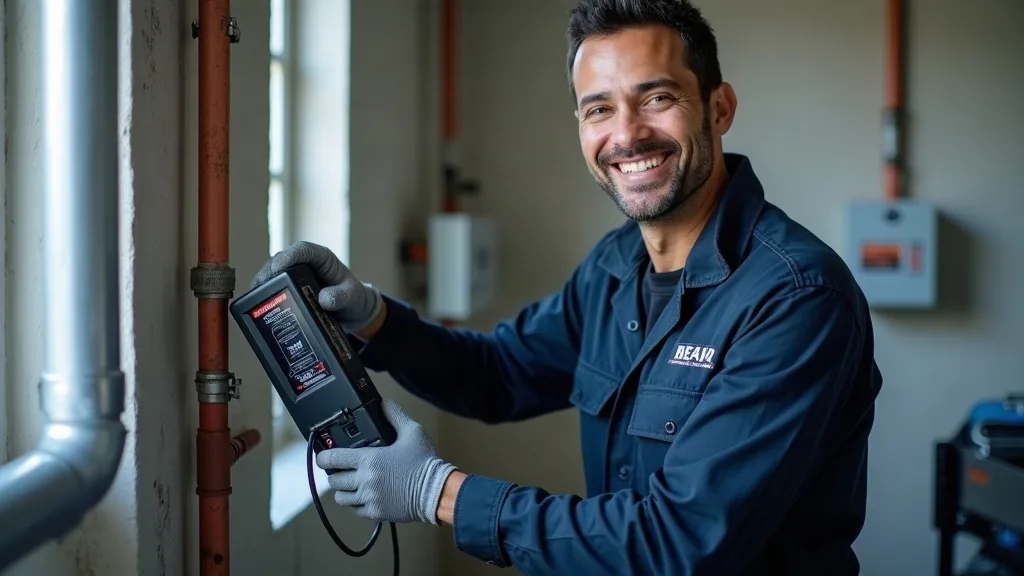
Our team serves Arlington and the surrounding Tarrant and Dallas County communities with non-invasive plumbing leak detection, slab leak repair, sewer line repair, and drain cleaning. Local pros use acoustic leak detectors, electronic amplification equipment, and thermal imaging to pinpoint the exact breach point before any saw touches concrete — protecting both your foundation and your wallet from the cost of exploratory demolition. This page is part of our broader leak detection service across Texas; Arlington's specific soil conditions, water chemistry, and housing stock make it one of the most active areas we cover.
Slab Leak Repair Costs for Arlington's Older Homes
Slab leak repair in Arlington typically runs between for a single-family home, with the final figure shaped heavily by pipe material, slab thickness, and access complexity. Homes built between the 1960s and 1990s — which make up a substantial portion of Arlington's residential stock — were plumbed with copper pipe or galvanized steel. Galvanized lines from that era are frequently corroded well past reliable service life, while aging copper in slab foundations is especially vulnerable to pinhole leaks accelerated by the hard water supplied through the Tarrant Regional Water District.
Hard water deposits narrow pipe interiors over time, concentrate corrosion at the thinnest points, and dramatically shorten the interval between a pinhole forming and that pinhole becoming a full pressure failure. When our local experts use a moisture meter to map dampness migrating through the slab, it is common to find that the active leak point is surrounded by earlier micro-failures the homeowner never noticed. Early detection keeps the repair confined to one access point rather than three or four.
The City of Arlington Development Services department requires permits for plumbing work that involves rerouting or replacing slab-embedded supply lines. Our documentation — precise leak location maps, pressure differential readings, and moisture meter logs — gives the permit application a clear technical foundation and reduces back-and-forth with the inspections office. If you discover a leak and your water bill has spiked, the City of Arlington Water Utilities offers a billing adjustment process for verified, repaired leaks; you will need a licensed plumber's repair receipt and, in most cases, a before-and-after meter reading to support the request.
Local pros also handle drain cleaning and sewer line repair when the inspection camera reveals root intrusion or joint separation alongside a slab leak — both problems are common in Arlington's older neighborhoods where large trees and aging clay sewer laterals coexist.
Leak Detection Across Arlington, Irving, Fort Worth and Keller
Leak detection in Arlington, TX is shaped above all by the Blackland Prairie clay soil that runs beneath most of the city's residential neighborhoods. That same clay geology extends across much of the DFW region, which is why our coverage of neighboring cities — Leak Detection in Irving, Leak Detection in Fort Worth, Leak Detection in Keller, and Leak Detection in Dallas — uses the same non-invasive toolkit calibrated for expansive-clay conditions.
Arlington is a city in Tarrant County, Texas, part of the Mid-Cities region of the DFW Metroplex, with a population of approximately 400,000. The sheer scale of the city's single-family housing stock — spread across established neighborhoods from the 1960s through newer subdivisions — means our team covers a wide geographic spread on any given service day. We also serve the broader communities of Grand Prairie, Mansfield, Kennedale, Euless, Bedford, and Hurst within Tarrant and Dallas County.
When a customer searches for leak detection near me in Arlington, TX, the response they need is one that accounts for local infrastructure, not just proximity. Our team brings calibrated acoustic leak detection equipment tuned to identify the specific frequency signatures that pressurized water produces when escaping through a pinhole in a copper slab pipe — a sound that travels differently through clay-saturated ground than through sandy or loam soils found elsewhere in Texas.
Gas Leak Detection Near Arlington's Entertainment District
Gas leak detection in Arlington requires coordination with Atmos Energy, the natural gas distribution utility that serves residential and commercial customers throughout the city, including the dense Entertainment District corridor around AT&T Stadium and Globe Life Field. If you smell gas — that sulfur or rotten-egg odor added to natural gas as a warning agent — leave the building immediately, avoid switching any electrical device on or off, and call Atmos Energy's emergency line before calling us. Atmos Energy's role is to isolate the meter and confirm it is safe for a licensed plumber to enter and perform interior line testing.
Once Atmos Energy has cleared the meter point, our team uses calibrated electronic gas leak detectors and combustible gas analyzers to trace the leak along the interior supply lines, appliance connections, and flexible connectors. The Entertainment District's commercial corridor — with its high-density restaurant and hospitality infrastructure — involves more gas appliance connections per building than a typical residential street, making methodical zone-by-zone pressure testing essential rather than optional.
For residential gas leak detection across Arlington's neighborhoods, the most common fault points we find are corroded black iron fittings in crawl spaces and attic-run gas lines, deteriorated flexible connectors behind ranges and dryers, and older threaded joints that have lost their seal compound over decades of thermal cycling. Checking for gas leaks is not a DIY task; combustible gas analyzers must be used by trained technicians who can distinguish ambient methane from an active supply line breach.
How Arlington's Clay Soil Compares to Fort Worth's for Slab Leaks
Both Arlington and Fort Worth share Blackland Prairie clay geology, but the degree of shrink-swell movement a slab experiences depends on localized soil depth, moisture retention, and the depth at which the slab was poured. Arlington's residential slabs from the 1960s and 1970s were often poured shallower than current code requires, which means the pipes embedded in them are closer to the zone of maximum clay movement — the upper layer that dries out first in summer and swells first after rain.
Fort Worth's westernmost neighborhoods transition toward the Cross Timbers geology, which is sandier and less expansive than the deep Blackland clays that dominate Arlington's established residential areas. In practice, this means slab leak detection in Arlington involves pipes that have experienced more cumulative movement stress than equivalent-age pipes in parts of Fort Worth underlain by that sandier soil. Our acoustic leak detector readings in Arlington frequently show multiple stress fracture points along a single pipe run, rather than the isolated single-point failures more common in lower-movement soil environments.
Arlington also averages over 230 sunny days per year, with summer temperatures regularly exceeding 100°F. Prolonged heat desiccates the clay rapidly, accelerating the shrink phase and increasing the mechanical load on shallow buried supply lines. That thermal stress, layered on top of the freeze-thaw cycles the National Weather Service records for the DFW area each winter, means Arlington slab pipes face stress from two opposing directions across the calendar year.
Checking a Pool Leak in an Arlington Backyard
Pool leak detection in Arlington backyards starts with ruling out evaporation before any equipment is deployed — in Arlington's high-heat summers, an uncovered pool can lose an inch or more of water per week to evaporation alone. The standard bucket test (filling a container to pool water level, setting it on a step, and comparing loss rates over 24 hours) distinguishes evaporation from a structural or plumbing leak before we commit to invasive testing.
When the bucket test confirms a real leak, our team runs a water pressure test on the return lines, skimmer lines, and main drain plumbing to identify any section holding pressure below specification. We follow that with an acoustic leak detector sweep along buried lateral lines, listening for the turbulent flow signature that escapes through a cracked return fitting or a joint failure in the underground plumbing. Pool plumbing in Arlington's clay soil is subject to the same ground movement stresses as residential slab pipes, so lateral line joint failures are a frequent finding rather than an unusual one.
Arlington's high summer irrigation demand also means that an undetected pool leak and an undetected irrigation line leak can compound on the same monthly water bill, making it difficult for homeowners to attribute the spike to a single source. Local pros test both systems independently when both are suspected, using zone-by-zone isolation to identify which line is losing pressure.
Water Leak Repair for Arlington Homes and Apartments
Water leak repair near me in Arlington covers a wider range of property types than most Texas cities of comparable size, because Arlington's housing stock spans everything from 1960s single-family homes on established slabs to large apartment complexes serving the university corridor. Apartment plumbing introduces shared-wall supply lines and stacked riser systems that make isolating a leak more complex than in a standalone house — a pinhole in a riser can migrate water laterally through framing and appear as a stain two units away from the actual breach point.
Our team uses a moisture meter to map the moisture gradient across walls and ceilings before cutting any drywall, allowing us to trace the water pathway back to its origin rather than opening every wet surface. In apartment buildings constructed in the 1980s and 1990s, the original copper supply risers are now at an age where hard water scale from the City of Arlington Water Utilities supply has thinned pipe walls at elbows and tee connections — the highest-pressure transition points in any riser system.
Water heater leak detection is a separate but related call we receive frequently in Arlington. A failing water heater can mask a concurrent slab or supply line leak because both show up as unexplained water pooling or elevated meter readings. Local pros test the water heater connection, the relief valve discharge line, and the cold inlet separately before concluding the appliance itself is the sole source. Homes upgraded to PEX pipe — either as a full re-pipe or a partial reroute above the slab — eliminate the corrosion pathway that makes copper in clay-stressed slabs so vulnerable, and PEX's flexibility tolerates minor soil movement far better than rigid copper joints.
For underground water leak detection in residential yards, our team uses electronic leak detection equipment to trace pressurized line loss along service laterals from the meter to the foundation. Arlington's high irrigation runtime — driven by its climate and the absence of recycled water infrastructure in most neighborhoods — increases the probability that an irrigation backflow preventer or a lateral fitting has developed a slow failure that the meter records but the homeowner never sees above ground. Local pros locate those failures before they migrate into the foundation zone.
Who does leak detection in Arlington Texas? Our specialists cover the full city and surrounding Tarrant County communities. Looking for a slab leak specialist near Arlington TX? Call us at any time — upfront pricing applies to every job.
Ready to Locate Your Leak?
TrueLeak Pros serves Arlington and the wider DFW area with non-invasive acoustic and electronic leak detection, slab leak repair, gas leak testing, pool leak detection, and full water leak repair services. We document every finding clearly — supporting City of Arlington Development Services permit applications and City of Arlington Water Utilities billing adjustment requests. We also cover Irving, Fort Worth, Keller, Dallas, and San Antonio. Call us any time at +1 (877) 682-0374 for upfront pricing and same-call scheduling.
Arlington National Cemetery is the largest cemetery in the United States National Cemetery System, one of two maintained by the United States Army. More than 400,000 people are buried in its 639 acres (259 ha) in Arlingt…
Arlington is a city in Tarrant County, Texas, United States. It is part of the Mid-Cities region of the Dallas–Fort Worth–Arlington metropolitan statistical area, and is a principal city of the metropolis and region.…
More Arlington Services
Explore related pages
Leak Detection in Irving
Leak Detection in Irving — more from our Arlington coverage.
Leak Detection in Fort Worth
Leak Detection in Fort Worth — more from our Arlington coverage.
Leak Detection in Keller
Leak Detection in Keller — more from our Arlington coverage.
Leak Detection in Dallas
Leak Detection in Dallas — more from our Arlington coverage.
Leak Detection in San Antonio
Leak Detection in San Antonio — more from our Arlington coverage.
Service Coverage: Arlington
Providing leak detection throughout Arlington
Service Areas
Landmarks Near Us
leak detection in Arlington — Common Questions Answered
Everything you need to know before hiring a professional in Arlington
How leak detection Works in Arlington
4 steps from first call to finished job
Call
Tell us what is wrong at your Arlington property and when suits you.
Call Now
You hear the price for the job before any work starts.
The Work Is Done
The work is carried out at your Arlington property at the time agreed.
Aftercare
Something not right afterwards? Call the same number.
Our Services in Arlington
Comprehensive leak detection solutions for Arlington homes and businesses
drain cleaning
Professional drain cleaning available throughout Arlington and surrounding areas.
Get a Quotesewer line repair
Professional sewer line repair available throughout Arlington and surrounding areas.
Get a Quoteslab leak repair
Professional slab leak repair available throughout Arlington and surrounding areas.
Get a QuoteWhy Arlington Homeowners Trust Us
The difference that makes our leak detection stand out in Arlington
Identify hidden leaks before they cause damage
One number for every address in Arlington.
Save on water bills with efficient leak detection
You hear the price for the job before any work starts.
Expert technicians using advanced technology
Help for homes and businesses across Arlington.
Prompt service for peace of mind
Call any time and say how urgent it is.
Comprehensive solutions for residential properties
One number for every address in Arlington.